A fig tree can look healthy for months and still produce very little fruit. You may see plenty of green leaves, strong branches, and steady growth, but only a handful of figs develop before the season ends. In many cases, the problem comes down to watering, pruning, sunlight, or the way the tree is managed throughout the year.
Good fig tree care focuses on creating the right growing conditions while allowing the tree to follow its natural growth cycle. Figs are relatively adaptable, but they need consistent attention to produce reliable harvests. Understanding their seasonal needs helps prevent common problems and encourages better fruit quality.
What Conditions Help a Fig Tree Grow Well?
Fig trees grow best in warm conditions with plenty of sunlight and well-drained soil. Most varieties need at least six to eight hours of direct sunlight each day for healthy growth and good fruit development. A sunny position also helps fruit ripen properly and reduces problems associated with excessive moisture around the canopy.
Choose a location with enough space for the mature tree. Many fig varieties develop wide canopies and extensive root systems. Planting too close to walls, drains, underground pipes, or paved areas can create maintenance problems later. In a small garden, a compact variety or container-grown tree may be a better choice.
Soil quality matters, but figs are not especially demanding. They can grow in several soil types as long as water drains away effectively. Heavy clay soil that stays wet for long periods can cause root problems. If the planting area drains poorly, consider improving the soil structure or choosing a raised planting position.
A slightly acidic to neutral soil is generally suitable. Before adding fertilizer or making major soil changes, consider a soil test. It can help identify nutrient shortages and prevent unnecessary applications.
How Much Sunlight Does a Fig Tree Need?
Sunlight has a direct effect on fruit production. A fig tree growing in deep shade may develop plenty of leaves but produce fewer fruits. Even when figs appear, they may take longer to ripen or lack the sweetness expected from the variety.
Choose the sunniest practical location in the garden. South-facing positions often receive strong sunlight in the Northern Hemisphere, although local conditions, buildings, and nearby trees can change the amount of light available. Observe the area throughout the day before planting.
If an established fig tree receives limited sunlight, avoid removing large branches without a clear reason. Heavy cutting can create additional stress and may not solve the underlying light problem. Where possible, reduce nearby shade from competing plants through careful maintenance.
Container-grown figs offer more flexibility. You can position the pot where it receives better sunlight and move it when seasonal conditions change. However, containers dry out faster than garden soil, so they need closer watering attention during warm weather.
How Should You Water a Fig Tree?
Watering is one of the most important parts of fig tree care, especially during active growth and fruit development. Young trees need regular moisture while their roots become established. Mature trees can tolerate some dry periods, but prolonged drought may reduce fruit size and cause premature fruit drop.
Water deeply rather than giving the tree small amounts every day. Deep watering encourages roots to grow farther into the soil. Allow the upper soil to dry slightly between watering sessions, but do not let the root zone remain completely dry for extended periods during hot weather.
The correct frequency depends on soil type, rainfall, temperature, tree age, and planting method. Sandy soil drains quickly and may need more frequent watering. Clay soil retains moisture longer, so watering too often can create waterlogged conditions.
Water More Carefully During Fruit Development
When figs begin to swell, consistent moisture becomes especially important. Sudden changes between very dry and very wet conditions can contribute to fruit splitting, particularly as fruits approach maturity. Heavy rain after a dry period may also cause problems.
For example, a gardener who waters a mature fig tree irregularly may notice small fruits dropping during a hot week. A more consistent schedule can reduce water stress and support better development. The goal is steady soil moisture, not constant saturation.
Adjust Watering for Container-Grown Figs
Potted fig trees require more frequent checks because containers hold less soil than garden beds. During hot weather, a large pot may dry much faster than the surrounding ground. Check moisture by feeling the soil rather than relying only on a fixed watering calendar.
Water until excess moisture drains from the bottom of the container. Empty standing water from saucers to prevent roots from remaining submerged. Choose a pot with drainage holes and a suitable growing mix.
When and How Should You Prune a Fig Tree?
Pruning helps control size, improve access, and maintain a productive structure. However, the right method depends on the variety, climate, age, and fruiting habit of the tree. Heavy pruning is not automatically better. Removing too much growth can reduce the number of fruiting sites.
Many gardeners prune established fig trees during dormancy, usually in late winter or early spring before strong new growth begins. In colder regions, wait until the worst freezing conditions have passed. In warmer climates, the timing may be earlier.
Start by removing dead, damaged, diseased, or crossing branches. These cuts improve the structure and reduce unnecessary congestion. Next, look for branches growing toward the center of the tree or rubbing against each other. Remove selected branches to create a balanced canopy with good light and airflow.
Shape Young Trees Early
Young figs benefit from light structural pruning. Decide whether you want a single-trunk tree or a more open, multi-stem form. Both approaches can work, but the choice should suit the available space and local growing conditions.
A container-grown fig may need a compact shape, while a tree planted in an open garden can develop a wider canopy. Avoid forcing a young tree into an unnatural form through repeated heavy cutting. Give it time to establish a strong framework.
Avoid Excessive Pruning
A common mistake in fig tree care is cutting back too much simply to make the tree look tidy. Vigorous pruning can encourage leafy growth at the expense of fruit production. It may also expose previously shaded branches to strong sunlight, increasing the risk of sun damage in hot climates.
Use sharp, clean tools and make controlled cuts just outside the branch collar. Avoid leaving long stubs or cutting flush against the trunk. If a large limb needs removal, or the tree has structural damage, seek professional advice.
How Can You Encourage Better Fig Production?
Fruit production depends on the variety, growing conditions, tree maturity, and seasonal weather. A healthy fig tree needs enough sunlight, suitable moisture, balanced nutrition, and a manageable canopy. If one of these factors is missing, the tree may grow well without producing a satisfying crop.
Start by confirming which variety you have. Some figs produce an early crop on older wood, while others produce their main crop on new growth. Certain varieties produce two crops in suitable climates. Understanding the fruiting habit helps you avoid pruning away branches that would have carried the next harvest.
Give the tree enough sunlight and avoid excessive nitrogen fertilizer. Nitrogen encourages leafy growth. When supplied in excess, it can lead to a large canopy with fewer fruits. Use fertilizer according to the tree’s condition and soil needs rather than applying it automatically.
Consistent watering also supports fruit development. A tree under severe water stress may drop developing figs, while waterlogged roots may struggle to absorb nutrients. Good drainage and steady moisture are more useful than frequent heavy watering.
Patience matters as well. Newly planted fig trees may need time to establish their roots before producing a substantial crop. A young tree that produces only a few fruits is not necessarily unhealthy. Focus on strong establishment rather than forcing early production.
Which Fertilizer Is Best for Fig Trees?
Figs generally benefit from balanced nutrition, but the correct fertilizer depends on soil conditions and the tree’s growth. A mature tree growing in fertile ground may need little additional feeding. A container-grown fig, on the other hand, has limited access to nutrients and may require more regular feeding during active growth.
Avoid applying high-nitrogen fertilizer without a clear need. Excess nitrogen can produce long shoots and large leaves while reducing fruiting. If growth is weak or leaves show unusual discoloration, check watering, drainage, pests, and soil conditions before assuming fertilizer is the answer.
Compost can improve soil structure and add organic matter. Apply a moderate layer around the root zone, keeping it away from direct contact with the trunk. A suitable mulch layer can also help retain moisture and reduce weed competition.
Do not fertilize heavily late in the growing season. Late feeding may encourage tender new growth that is less prepared for cold weather. Follow product instructions and adjust feeding to the local climate and the tree’s growth stage.
What Common Problems Affect Fig Trees?
Even well-maintained fig trees can develop problems. Regular inspection helps identify changes before they affect the whole canopy or reduce the harvest.
Fig Rust and Leaf Spots
Fig rust is a fungal disease that can cause yellowish spots on the upper leaf surface and rusty brown areas underneath. Infected leaves may drop early, reducing the tree’s ability to support fruit development.
Improve airflow by avoiding an overly dense canopy. Remove heavily affected fallen leaves and dispose of them appropriately rather than leaving infected material around the tree. If symptoms spread, consult a local horticulture expert about suitable treatment options.
Root Problems and Leaf Yellowing
Yellow leaves can result from several causes, including overwatering, poor drainage, nutrient deficiencies, and root damage. Do not treat every yellow leaf as a fertilizer problem. Check the soil moisture and drainage first.
If the ground remains wet for days after watering, the roots may be receiving too little oxygen. Improve drainage where practical and adjust watering frequency. Persistent yellowing or declining growth may require a soil test or professional inspection.
Pests and Wildlife
Birds, insects, and other animals may damage ripening figs. Netting can protect fruit, but it must be installed securely and checked regularly so wildlife does not become trapped. Harvesting ripe fruit promptly also reduces losses.
Inspect leaves and stems for unusual insects, webbing, or feeding damage. Use pest treatments only when necessary and choose products appropriate for edible fruit crops. Always follow label directions, including any waiting period before harvest.
How Do You Know When Figs Are Ready to Harvest?
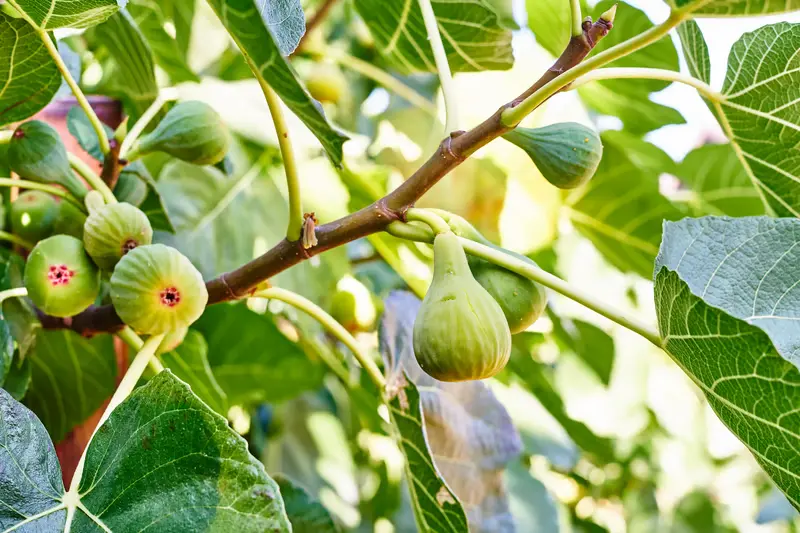
Figs do not ripen in the same way as many common fruits. They generally do not become sweeter after picking, so harvesting at the right stage matters. A ripe fig often softens, changes color according to its variety, and begins to droop from the branch.
Look for a fruit that feels slightly soft when gently touched. The neck may bend downward, and a small drop of syrup may appear near the base. Color alone is not a reliable guide because different varieties mature into green, purple, brown, or nearly black shades.
Pick figs carefully to avoid tearing the fruit or damaging the branch. Many ripe figs detach with gentle handling. Wear gloves if the tree produces irritating milky sap, and wash your hands after harvesting.
Harvest regularly during the fruiting period. Ripe figs can spoil quickly, especially in hot weather. Use them fresh, refrigerate them for short-term storage, or preserve them through drying, freezing, or cooking.
How Should You Care for a Fig Tree Through the Seasons?
Seasonal maintenance keeps the tree prepared for changing weather. In spring, check for winter damage, inspect new growth, and carry out any necessary light pruning before the canopy becomes dense. Apply compost or fertilizer only when the tree needs additional nutrients.
During summer, monitor soil moisture and watch for pests, leaf diseases, and developing fruit. Container-grown trees may need more frequent watering than trees planted in the ground. Harvest ripe figs promptly to reduce spoilage and animal damage.
In autumn, reduce unnecessary feeding and remove fallen fruit or diseased plant material. In colder regions, protect young trees from severe frost using suitable covers or other locally recommended methods. Container-grown figs may need winter protection or a sheltered position, depending on the variety and climate.
Winter is often the main period for structural pruning in suitable climates. Check the trunk and branches for damage, but avoid major work during severe freezing conditions. A seasonal routine makes fig tree care easier because you address problems before they become difficult to manage.
Conclusion
A productive fig tree needs more than occasional pruning and watering. It requires a suitable planting location, plenty of sunlight, well-drained soil, consistent moisture, and balanced nutrition. Careful pruning preserves fruiting wood, while regular inspections help identify disease, pests, and root problems before they become serious.
The most effective approach is to understand your variety and respond to its actual needs. Avoid excessive cutting, prevent prolonged soil dryness or waterlogging, and harvest fruit when it is fully ripe. With steady attention throughout the year, fig tree care can become a manageable routine that rewards you with healthy growth and flavorful harvests.